Lookbook
Four British registers. One wardrobe that can move between them.
We do not chase seasons as theatre. We photograph the clothes men in this country actually need: a city suit, a serious coat, an evening jacket, and something that survives the Peak District.
Look 01 · City
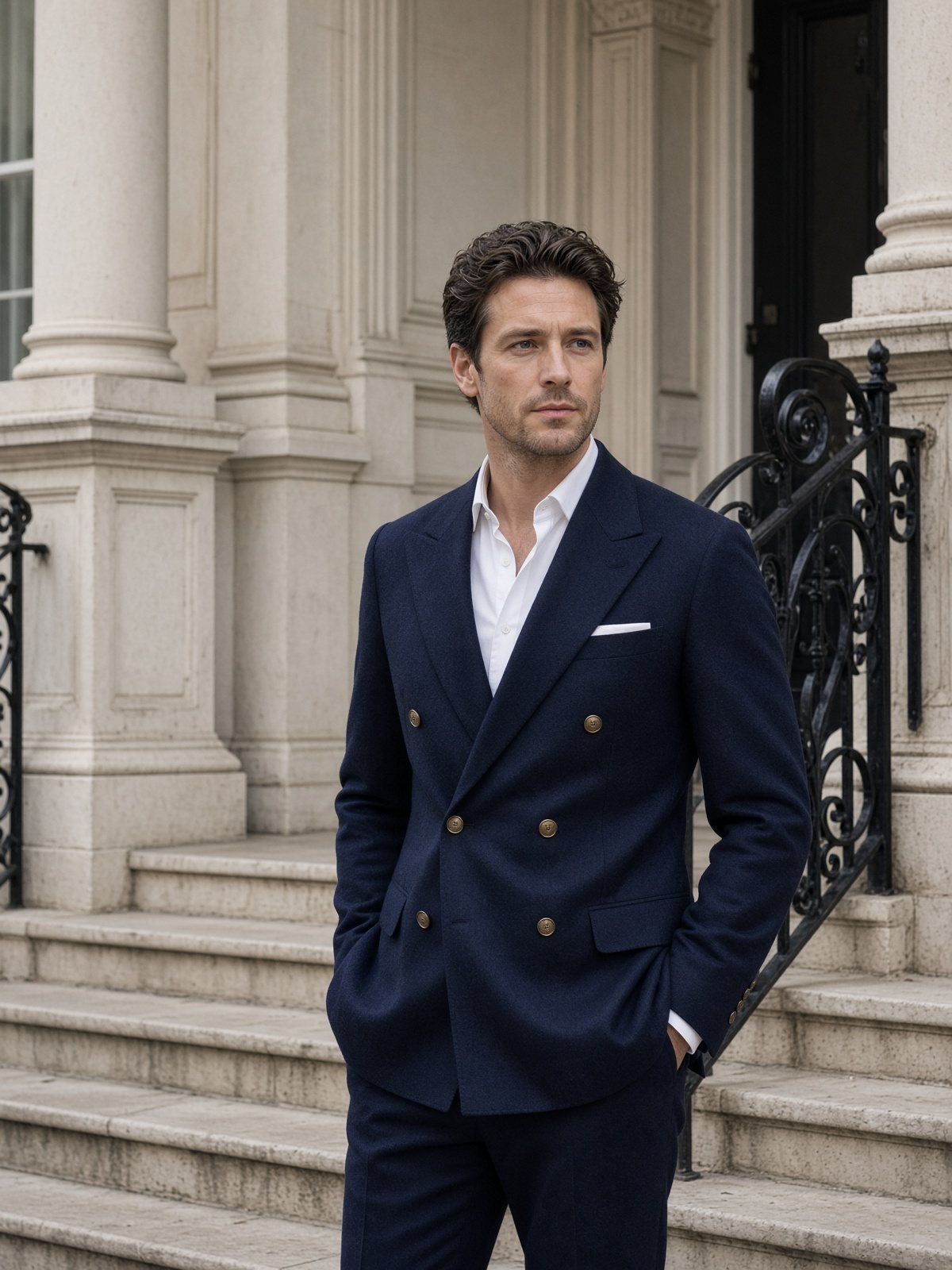
Navy, double-breasted, no costume.
A six-on-two double-breasted in mid-weight wool is the most useful formal jacket a British man can own. It reads as intention on a Mayfair doorstep and as competence in a Manchester boardroom. Wear it with a white oxford, no tie, and a pocket square that is actually a handkerchief.
Cloth: 12–13oz worsted or a fine flannel if the office still runs cold. Shoulder: natural, not a rugby pad. Trouser: a slight break, enough to cover the sock on a wet pavement. Brass buttons only if they have gone quiet with age — new gilt looks like a blazer from a marina.
The test is Tuesday. If it still looks correct after a 7:12 train, a sandwich at the desk, and a 6pm walk to the Northern Quarter, it is a working suit, not a photograph.
Look 02 · Weather
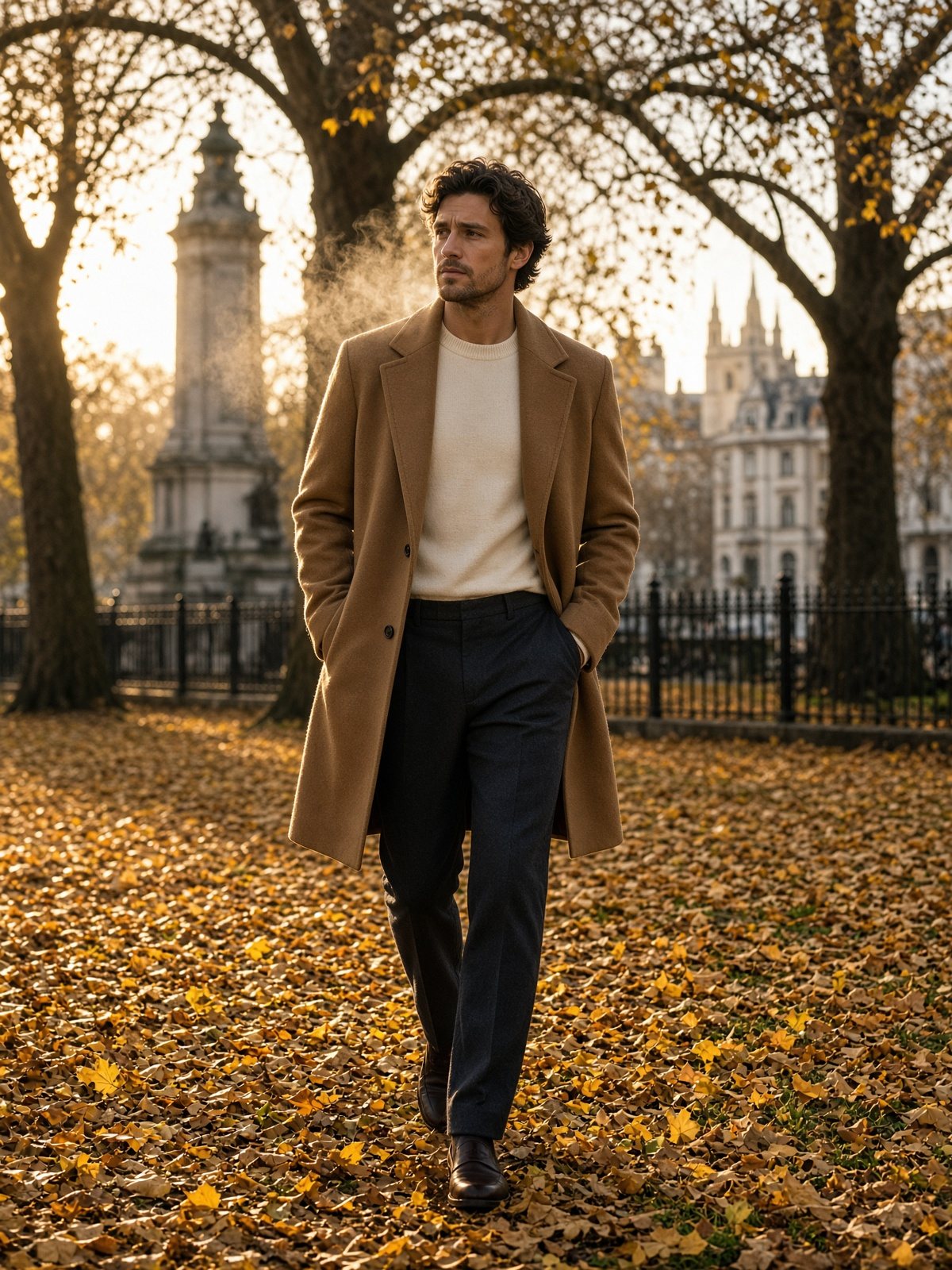
The overcoat is architecture.
British weather is not a styling problem. It is the brief. A camel or charcoal overcoat in dense wool, long enough to cover the jacket, is the difference between looking caught out and looking as if you expected the sky to change — which, here, you should.
Under it: a merino crew, not a hoodie, not a technical mid-layer that rustles in a quiet room. Dark flannel trousers. Leather gloves if you are serious. The park in November is the proving ground; if the coat balloons in a crosswind it is too light, or too cheaply canvassed.
Buy one coat properly rather than three fashion coats. Have the sleeves shortened so the shirt cuff still shows when you reach for a rail. That is the whole trick.
Look 03 · After dark
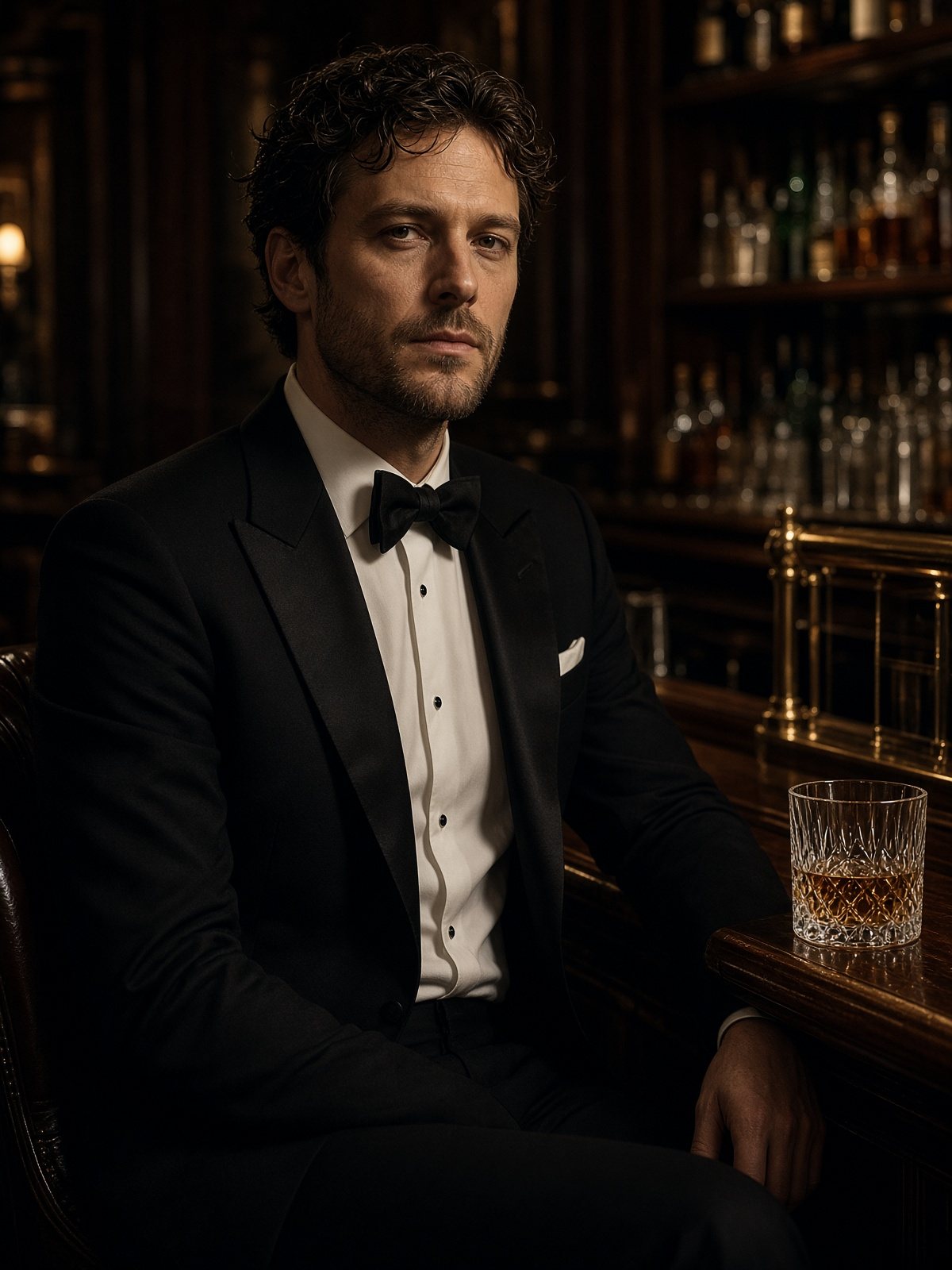
Black tie that does not announce itself.
Evening dress in Britain is still a language. A peak-lapel dinner jacket, a self-tie bow, and a shirt with a proper bib will take you through a gala, a wedding, and the hotel bar afterwards. Satin should be dull, not laser-cut. Shoes should be pumps or a very plain oxford, polished until they look wet.
Skip the novelty: no velvet unless the room is already a velvet room, no coloured bow ties, no trainers under a tuxedo. The point of black tie is that everyone agreed to the same quiet. If you want to be seen, speak well and stand still.
Look 04 · Country
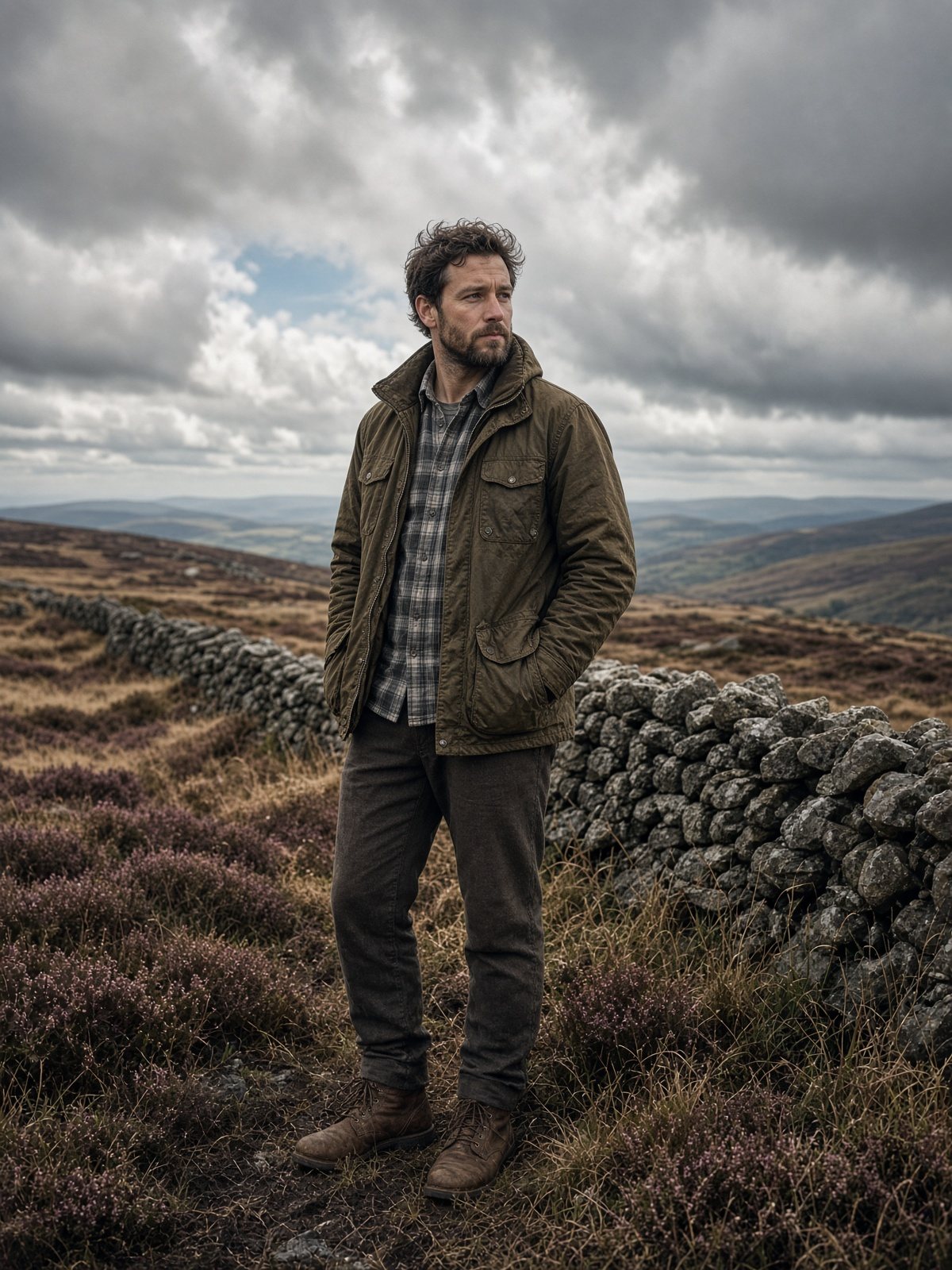
Clothes that already know the moor.
A waxed cotton field jacket, a flannel shirt, and boots with a sole that bites are not “outdoors lifestyle”. They are the correct tools for Derbyshire weather. The Peak District does not flatter a city trainer or a fashion parka that wets through at the first stile.
Leave the shooting-estate theatre at home unless you are actually on an estate. What we want is cloth that takes rain, a collar that turns up, and pockets deep enough for a map that still exists on paper. Then the same jacket over a knit on a Manchester Saturday, because that is how British weekends actually work.
Look 05 · High summer
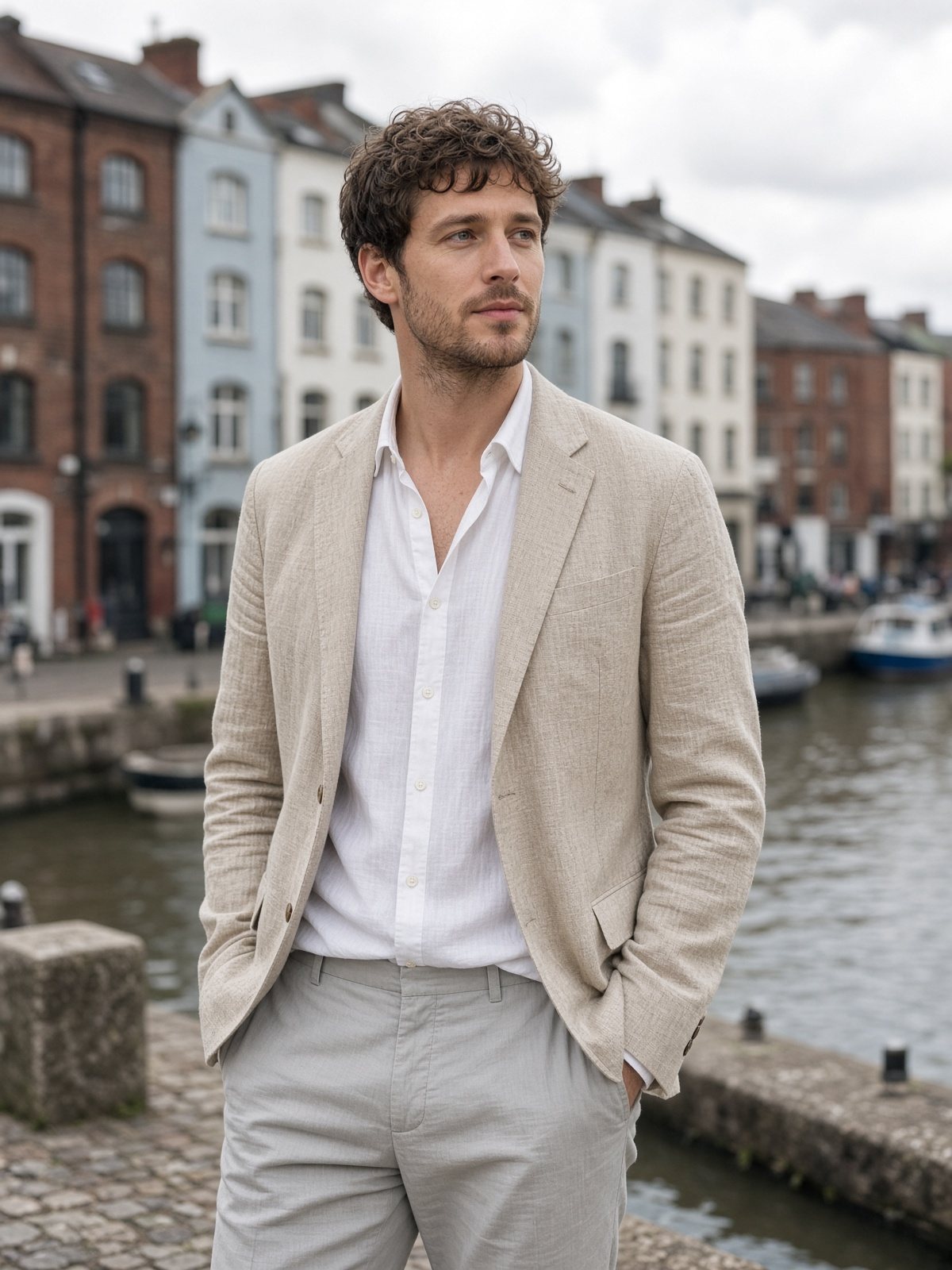
Linen, unstructured, and slightly creased on purpose.
British summer is brief and humid. An unstructured linen blazer in sand or stone, an open collar, and chinos that are not beige-corporate will do more for you in Bristol or along the Thames than a technical polo. Linen should crease. If it does not, it is not linen you will like in August.
Keep the rest of the wardrobe darker so the light jacket is an event, not a total look. Brown suede loafers if the pavement is dry; leather if it is not. Never both white trainers and a blazer unless you are already late.
Cloth notes from the rail
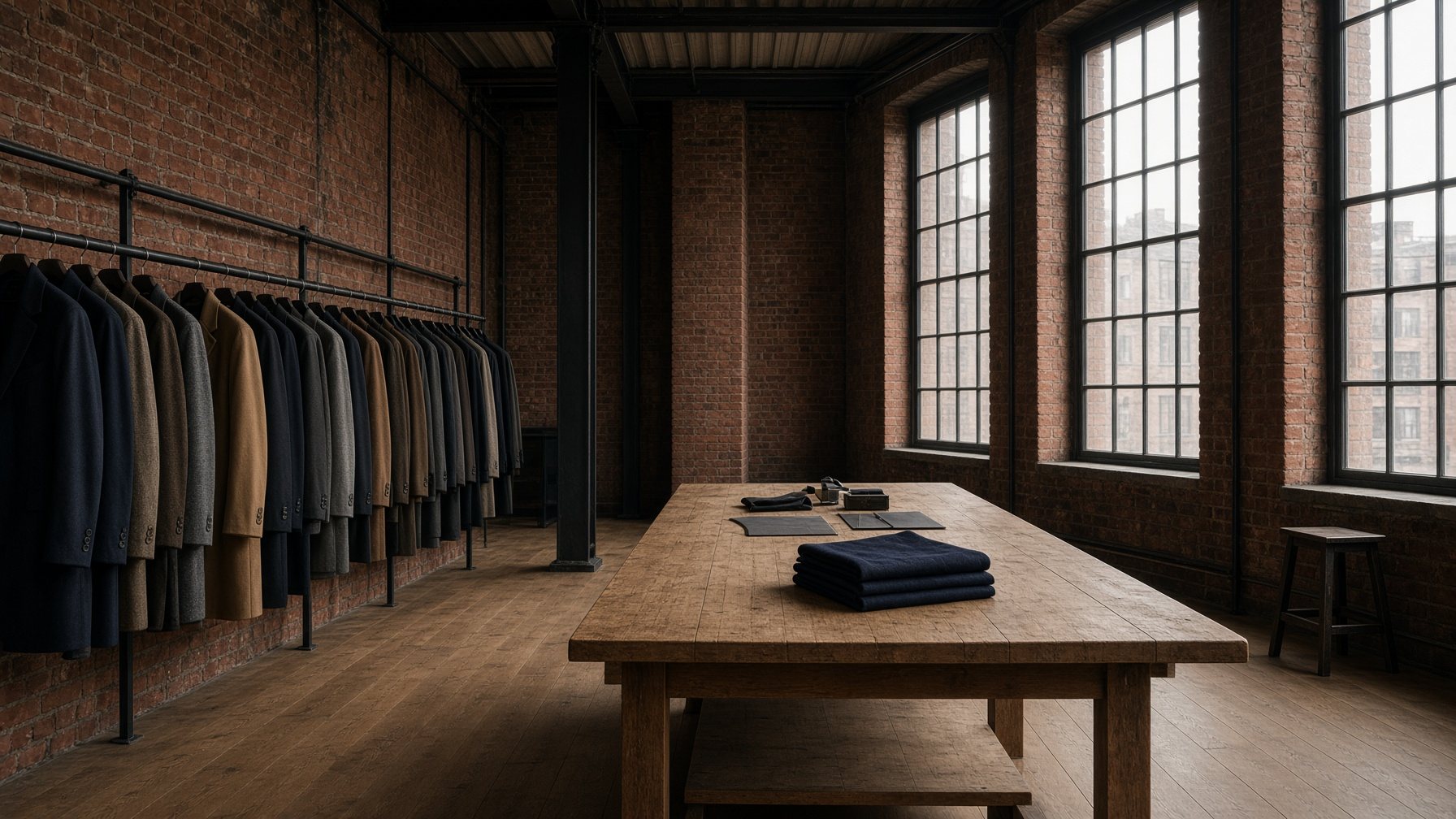
We keep a working rail in the Grosvenor Street studio: navy, charcoal, camel, stone, and the odd rust knit. The point is not inventory. It is to sit with cloth under Manchester light, which is cooler and greyer than a lookbook skylight, and to see what still holds.
Visit the house